


Should PM Narendra Modi Attend the G-7 Summit? Key Arguments For and Against
Introduction:
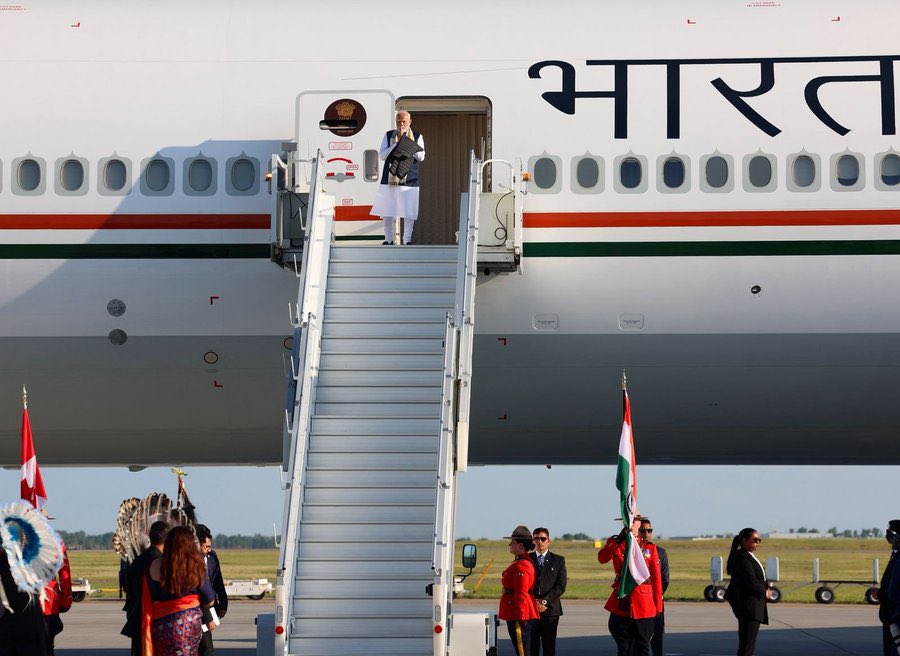
As global leaders prepare for the upcoming G-7 Summit 2025, one critical question arises in Indian political and diplomatic circles: Should Prime Minister Narendra Modi attend the G-7 Summit? With India playing an increasingly important role on the world stage, Narendra Modi’s G-7 Summit participation could carry significant geopolitical and economic implications. While some experts argue that his presence would reinforce India’s global leadership and strategic alliances, others suggest that domestic priorities and diplomatic nuances might warrant a more cautious approach. This article explores the key arguments for and against PM Modi’s attendance at the G-7 Summit.

Why should PM Narendra Modi not go to G-7 Summit ?

Many issues were discussed in the G-7 summits in the last 10 years but no results were achieved.
G7 Summit conclusions (communiqués or major takeaways) from the last 10 years (2015–2024):
1. 2024 – Borgo Egnazia, Italy
- Key Themes: AI governance, Ukraine, migration, Africa, climate change, and economic resilience.
- Conclusion: Reaffirmed support for Ukraine; pledged stronger collaboration on AI regulation; promoted Africa-G7 partnerships; agreed to tackle global inequality and climate financing.
2. 2023 – Hiroshima, Japan
- Key Themes: Nuclear disarmament, Ukraine, economic security, climate, and China.
- Conclusion: Condemned Russia’s invasion of Ukraine, reaffirmed nuclear non-proliferation; raised concerns over economic coercion and China’s behavior in the Indo-Pacific; committed to phasing out fossil fuels.
3. 2022 – Schloss Elmau, Germany
- Key Themes: Russia-Ukraine war, energy crisis, climate change, food security.
- Conclusion: United stance against Russian aggression; launched the “Climate Club” to accelerate decarbonization; $4.5B committed to fight global hunger.
4. 2021 – Cornwall, United Kingdom
- Key Themes: Post-COVID recovery, vaccine distribution, climate, open societies.
- Conclusion: “Build Back Better” plan endorsed; pledged 1 billion COVID vaccine doses; support for green recovery and infrastructure in developing countries.
5. 2020 – [Cancelled due to COVID-19] (U.S., planned at Camp David)
- Note: Originally planned under President Trump, the summit was canceled; discussions were held virtually without a formal communiqué.
6. 2019 – Biarritz, France
- Key Themes: Inequality, climate, Iran, tech regulation, trade.
- Conclusion: Informal format without a traditional joint communiqué due to tensions (especially with the U.S.); commitments made on gender equality, digital taxation, and Amazon rainforest protection.
7. 2018 – Charlevoix, Canada
- Key Themes: Trade, gender equality, climate, ocean health.
- Conclusion: U.S. withdrew support from the final communiqué after disputes over tariffs; other G7 nations reaffirmed Paris Agreement support.
8. 2017 – Taormina, Italy
- Key Themes: Terrorism, trade, climate change.
- Conclusion: Unity on anti-terrorism; deep divide on climate—U.S. refused to join the others in supporting Paris Agreement.
9. 2016 – Ise-Shima, Japan
- Key Themes: Global economy, terrorism, migration, health security.
- Conclusion: Reiterated commitment to inclusive growth, condemned terrorism, and backed women’s empowerment initiatives.
10. 2015 – Schloss Elmau, Germany
- Key Themes: Climate change, Russia-Ukraine conflict, health.
- Conclusion: G7 supported limiting global temperature rise to 2°C; agreed on phasing out fossil fuels by end of century; reaffirmed sanctions on Russia.
Khalistan Movement Activities in G7 Countries (2020–2024)

1. Canada
Status: Hotspot for pro-Khalistan activities
Key Events:
- 2023: Canada accused by India of harboring Khalistani extremists.
- September 2023: Canadian PM Justin Trudeau alleged Indian involvement in the killing of Hardeep Singh Nijjar, a known Khalistan supporter.
- Mass rallies were held across Canada supporting Khalistan; Indian consulates faced protests.
- Result: Major diplomatic fallout — both countries expelled diplomats and paused trade talks.
Government Response:
- Canada upheld “freedom of expression” laws but condemned violence.
- India called on Canada to act against extremist elements.
2. United Kingdom
Status: High Khalistani presence and activism
Key Events:
- March 2023: Pro-Khalistan protesters stormed the Indian High Commission in London, pulling down the Indian flag.
- Rallies held annually on Operation Blue Star anniversaries.
Government Response:
- UK condemned the attack; increased security around Indian missions.
- India summoned the UK envoy and demanded stronger action.
3. United States
Status: Active but more regulated
Key Events:
- 2023: Pro-Khalistan referendum-style events held by separatist group SFJ (Sikhs for Justice).
- Allegations by U.S. officials that India was involved in a foiled assassination plot of a Khalistani figure (Gurpatwant Singh Pannun) — a major diplomatic issue in late 2023.
Government Response:
- U.S. opened a Justice Department investigation.
- India denied official involvement, called it a “rogue operation” if it occurred.
4. Australia
Status: Growing activity, especially post-2022
Key Events:
- 2023: Indian temples vandalized with pro-Khalistan graffiti in Melbourne and Brisbane.
- Multiple protests and SFJ-led referendums held.
Government Response:
- Australia condemned vandalism, promised investigations.
- Tightened scrutiny on visa and protestor behavior.
5. France, Germany, Italy, Japan
Status: Minor presence
- France: Occasional protests; tight law enforcement.
- Germany: Monitored radical activities; few visible protests.
- Italy & Japan: Minimal Khalistan-related activity reported
Summary Table
| Country | Activity Level | Major Incidents (2020–2024) | Diplomatic Impact |
|---|---|---|---|
| Canada | Very High | Nijjar killing, protests | Major tensions |
| UK | High | Embassy storming, rallies | Formal protests |
| USA | High | SFJ events, Pannun plot | Investigations |
| Australia | Medium-High | Temple vandalism, protests | Growing concern |
| France | Low | Small protests | Minor |
| Germany | Low | Under observation | Low |
| Italy/Japan | Minimal | None notable | None |
Overall Trends
- SFJ (Sikhs for Justice) has been the most active group internationally.
- India has consistently demanded action against Khalistani extremists abroad.
- G7 countries often balance freedom of speech laws with counter-extremism efforts, causing friction with India.
G7 Countries: Economic Overview (2020–2024) Last 5 Years

| Country | 2020 (COVID Crash) | 2021 (Recovery) | 2022 (Inflation Spike) | 2023 (Stabilization) | 2024 (Recent Trends) |
|---|---|---|---|---|---|
| 🇺🇸 USA | -3.4% GDP | +5.9% | +2.1%, inflation ~8% | +2.5% GDP, inflation easing | ~2.0% GDP, Fed soft-landing focus |
| 🇨🇦 Canada | -5.4% GDP | +4.5% | +3.4%, inflation ~6.8% | +1.7% GDP | ~1.5% GDP, high interest rates |
| 🇬🇧 UK | -9.8% GDP | +7.5% | +4.1%, inflation ~9% | ~0.5%, near recession | ~0.7% GDP, weak growth persists |
| 🇩🇪 Germany | -4.9% GDP | +2.6% | +1.9%, energy crisis hit | ~0.2%, stagflation fears | ~0.3%, technical recession in early 2024 |
| 🇫🇷 France | -8.0% GDP | +6.8% | +2.5%, inflation ~5.9% | ~0.9% growth | ~1.1% GDP, moderate rebound |
| 🇮🇹 Italy | -8.9% GDP | +6.6% | +3.7%, inflation ~8.1% | ~0.6% growth | ~0.9% GDP, high debt concerns |
| 🇯🇵 Japan | -4.5% GDP | +2.1% | +1.0%, yen weakened | ~1.9% GDP, weak yen | ~1.0%, slow but steady recovery |
U.S. Presidential Policies Toward India
U.S. presidential policies toward India under the last two Presidents: Joe Biden (2021–present) and Donald Trump (2017–2021).

U.S. PRESIDENTS’ INDIA POLICY (Last Two Terms)
| Aspect | Joe Biden (2021–Present) | Donald Trump (2017–2021) |
|---|---|---|
| Focus Area | Strategic tech, defense, climate, democratic alliance | Trade, defense, counterterrorism |
| India’s Role | Key partner in Indo-Pacific strategy, QUAD | Ally in South Asia to counter China and terrorism |
| Major Visits | PM Modi visited U.S. in 2021 & 2023 (State Visit) | Trump visited India (Feb 2020 – Namaste Trump event) |
| Defense Ties | Stronger: Expanded joint exercises, arms agreements | Major arms deals: MH-60 choppers, Apache, etc. |
| QUAD Partnership | Revived and expanded QUAD summits | Set the foundation for QUAD revival |
| Trade Relations | No major FTA, but reduced friction, high-tech focus | Trade tensions: Tariffs, GSP withdrawal from India |
| Tech & Innovation | iCET (Initiative on Critical and Emerging Tech) | Limited focus on digital/tech cooperation |
| Climate Change | Joint climate action efforts with India | Less priority on climate cooperation |
| China Strategy | India = Core ally to counter China’s rise | India = Key partner vs China in Indo-Pacific |
| Ukraine/Russia War Stance | Pressured India to reduce Russian oil imports | Tolerated India-Russia ties more freely |
U.S. Presidential Policies Perceived Against India (Last 2 Presidents)
Summary Table
| Issue | Joe Biden | Donald Trump |
|---|---|---|
| Russia Oil & Ukraine War | Pressured India to reduce Russian ties | Less pressure, more tolerant |
| Human Rights Concerns | Raised often by U.S. officials | Rarely raised |
| Trade Disputes | Eased tensions, but no FTA | GSP withdrawal, tariff battles |
| Visa & Immigration | Some H-1B tightening continued | Stricter on H-1B, immigration rules |
India-Pakistan June 2025 Conflict: G7’s Silent Tilt Towards Pakistan?
1. Conflict Overview: June 2025
- Tensions flared up in Kashmir, reportedly due to cross-border militant activity.
- India launched precision strikes in response to an alleged terror camp attack.
- Pakistan retaliated with artillery fire along the LoC.
- Media outlets reported short-lived but intense skirmishes.
2. U.S. and G7’s Response
- No outright condemnation of Pakistan’s role in terrorism.
- G7 communiqué called for “restraint from both sides” — seen in India as moral equivalence.
- The U.S. reportedly paused defense sales to India citing “regional tension”, which drew criticism.
- Meanwhile, IMF support for Pakistan’s economy (with U.S. influence) continued without pause.
Conclusion: Narendra Modi G-7 Summit Participation – A Strategic Necessity
In today’s shifting global landscape, Narendra Modi’s G-7 summit attendance is more than a diplomatic gesture—it’s a strategic move to assert India’s global leadership. As the world’s fifth-largest economy and a voice of the Global South, India’s presence at the G-7 platform strengthens its international influence and promotes multi-polar dialogue on key issues like climate change, technology, trade, and geopolitics.
While critics may question the relevance of aligning with Western powers, the reality is clear: Prime Minister Narendra Modi’s participation in the G-7 summit ensures that India’s voice is heard at the highest levels of global decision-making. Skipping the summit could risk losing momentum in shaping international policies that directly impact India’s future.
In conclusion, Narendra Modi at the G-7 summit represents India’s rise on the world stage and reaffirms its role as a responsible global power.