

Introduction – THAI CARGO SHIP ATTACKED IN STRAIT OF HORMUZ
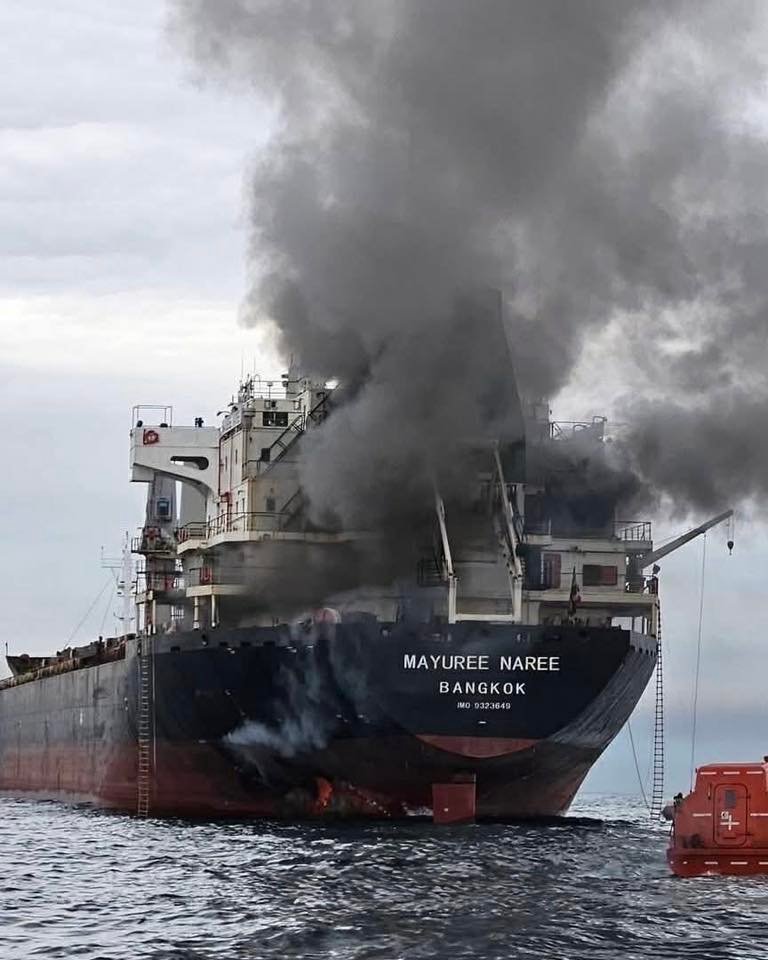
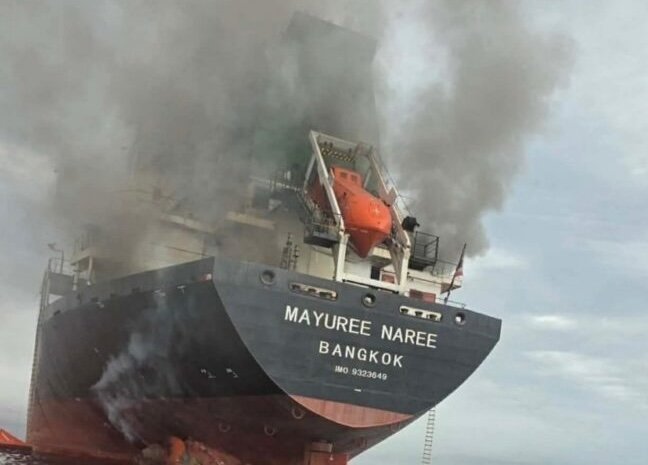
A Thai cargo vessel, MAYUREE NAREE, was reportedly attacked while sailing through the strategic Strait of Hormuz, one of the world’s most important maritime trade corridors. Images shared by Thai media show visible damage to the ship after the suspected strike, raising fresh concerns about maritime security in the volatile Middle East region. The Strait of Hormuz is a crucial gateway connecting the Persian Gulf to international waters and handles a large portion of global oil and cargo shipments. Any attack on commercial vessels in this region could disrupt international trade and increase geopolitical tensions. Authorities are currently investigating the incident, while global shipping companies are closely monitoring the situation.
What Happened to the Thai Cargo Ship MAYUREE NAREE?
According to initial reports, the cargo vessel MAYUREE NAREE was passing through the Strait when it was attacked by unidentified forces. Images shared by Thai media outlets show visible damage to the ship, suggesting that the vessel may have been struck during the incident.
Authorities are still investigating the circumstances surrounding the attack. It remains unclear whether the vessel was directly targeted or caught in broader regional tensions affecting maritime traffic.
Fortunately, there have been no immediate reports confirming casualties among the crew, but maritime authorities and shipping companies are closely monitoring the situation. THAI CARGO SHIP ATTACKED IN STRAIT OF HORMUZ

Crew Rescue and Missing Sailors
Rescue operations were quickly launched after the attack. According to maritime authorities, 20 crew members were rescued by the Omani navy, while three crew members who were in the engine room at the time of the explosion remain missing.
Search and rescue teams are continuing efforts to locate the missing sailors, while maritime authorities are assessing the damage to the vessel.
Why the Strait of Hormuz Is So Important
The Strait of Hormuz is one of the most strategically important waterways in the world. Nearly one-fifth of the world’s oil supply passes through this narrow maritime corridor every day.
Several major oil-producing countries rely on this route to export crude oil and natural gas to global markets. Because of its strategic importance, the region has frequently been a hotspot for geopolitical tensions.
Any attack on a cargo ship in this area can create uncertainty in global shipping, raise insurance costs for shipping companies, and potentially impact oil prices. THAI CARGO SHIP ATTACKED IN STRAIT OF HORMUZ
Thai Government and Navy Response
The Thai government and the Royal Thai Navy quickly responded to the incident. Officials confirmed that the cargo ship was attacked while transiting the Strait of Hormuz, and authorities have begun coordinating rescue operations and investigations.
Thailand’s transport and maritime authorities are working closely with international partners and regional naval forces to ensure the safety of the crew and to determine the exact cause of the attack.
Officials also stated that the situation is being monitored closely due to the rising security risks for commercial vessels operating in the Middle East. THAI CARGO SHIP ATTACKED IN STRAIT OF HORMUZ
Growing Maritime Security Concerns
Recent years have seen multiple incidents involving commercial vessels in the Middle East region. Shipping companies and international maritime organizations have repeatedly warned about increasing risks in the area.
The attack on MAYUREE NAREE once again highlights the vulnerability of commercial shipping routes in politically sensitive regions.
Security analysts say that attacks on cargo ships are often linked to broader geopolitical conflicts or regional tensions. Even isolated incidents can have a ripple effect across global supply chains.
Impact on Global Trade and Shipping
The global shipping industry depends heavily on safe maritime routes. Any instability in critical chokepoints like the Strait of Hormuz can disrupt supply chains and increase transportation costs.
If tensions escalate, shipping companies may be forced to reroute vessels or increase security measures. This could slow down cargo deliveries and raise shipping expenses worldwide.
Energy markets also tend to react quickly to incidents in the region because a large percentage of the world’s oil shipments travel through this narrow passage.
Conclusion
The attack on the Thai cargo ship MAYUREE NAREE in the Strait of Hormuz has once again highlighted the growing risks facing commercial shipping in the Middle East. With the Thai government and international maritime authorities closely monitoring the situation, the safety of global shipping routes remains a major concern.
As investigations continue and rescue efforts search for missing crew members, the world is watching closely to see whether tensions in the region will escalate further.